
Robotics & Precision Engineering
The μ in FOCUS.
Robotics and precision engineering place the highest demands on accuracy, repeatability, and process reliability. Compact drives, high-precision joint and guide systems, and increasingly intricate component geometries require manufacturing processes in which even the smallest deviations can affect the functionality of the entire system. Whether it’s joint components, motor shafts, gears, or watch cases: what matters most is positioning and centering with micrometer precision, the highest concentricity and dimensional accuracy, and low-deformation clamping of sensitive precision components.
STERMAN consistently designs custom clamping systems and production technology based on workpiece geometry, functional surfaces, and machining processes. In doing so, clamping forces are specifically applied to the workpiece, reference and machining surfaces are kept optimally accessible, and complex geometries are positioned with reproducible accuracy. Depending on the manufacturing task, a range of solutions is employed, from high-precision diaphragm chucks, collet chucks, and other mechanical precision clamping systems, to spindle assemblies and fixtures, all the way to automated special-purpose machines. With PICEA, clamping technology also becomes an active component of the manufacturing process: The workpiece position can be detected and actively corrected with a control resolution of up to 0.5 μm.


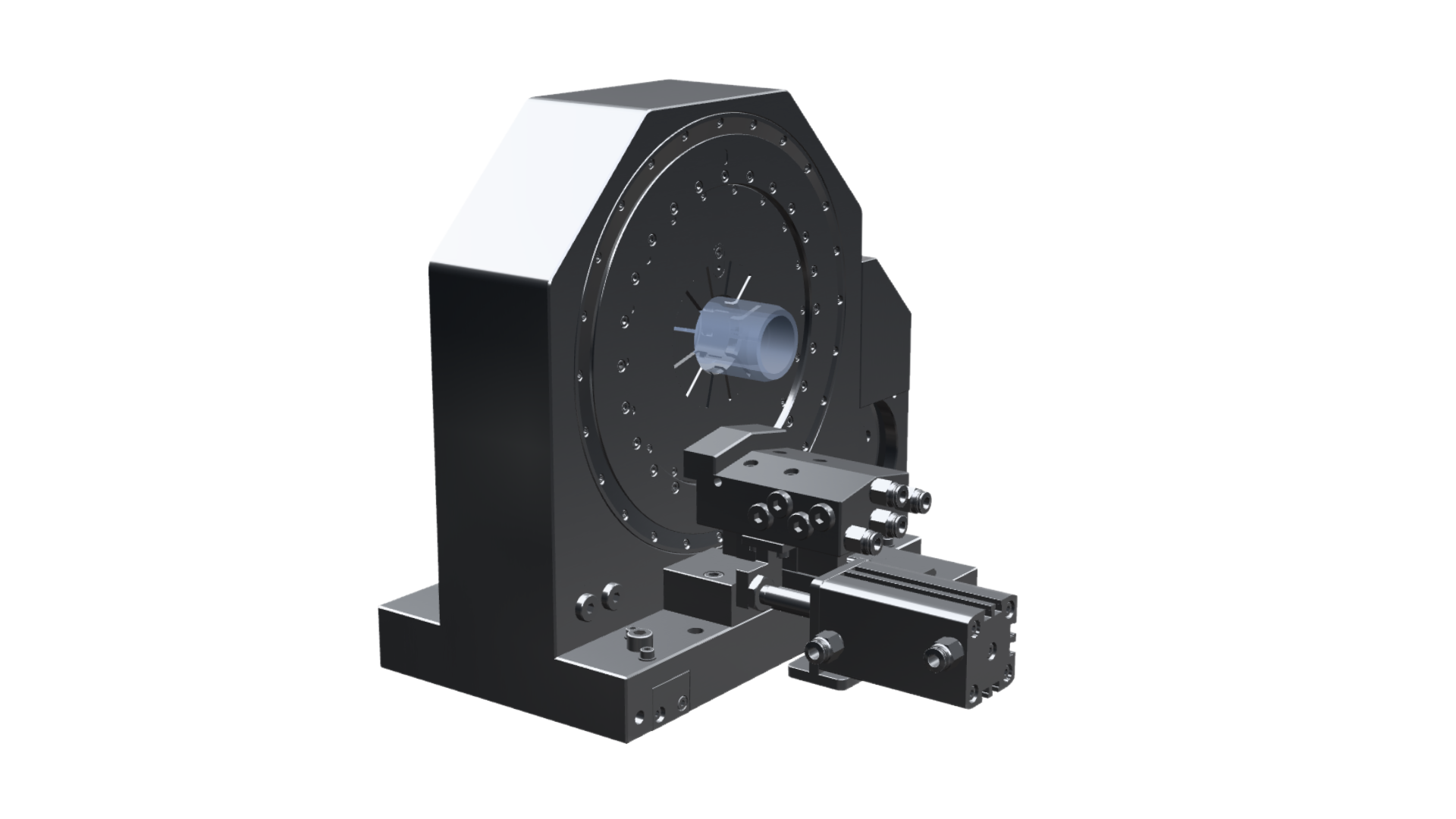
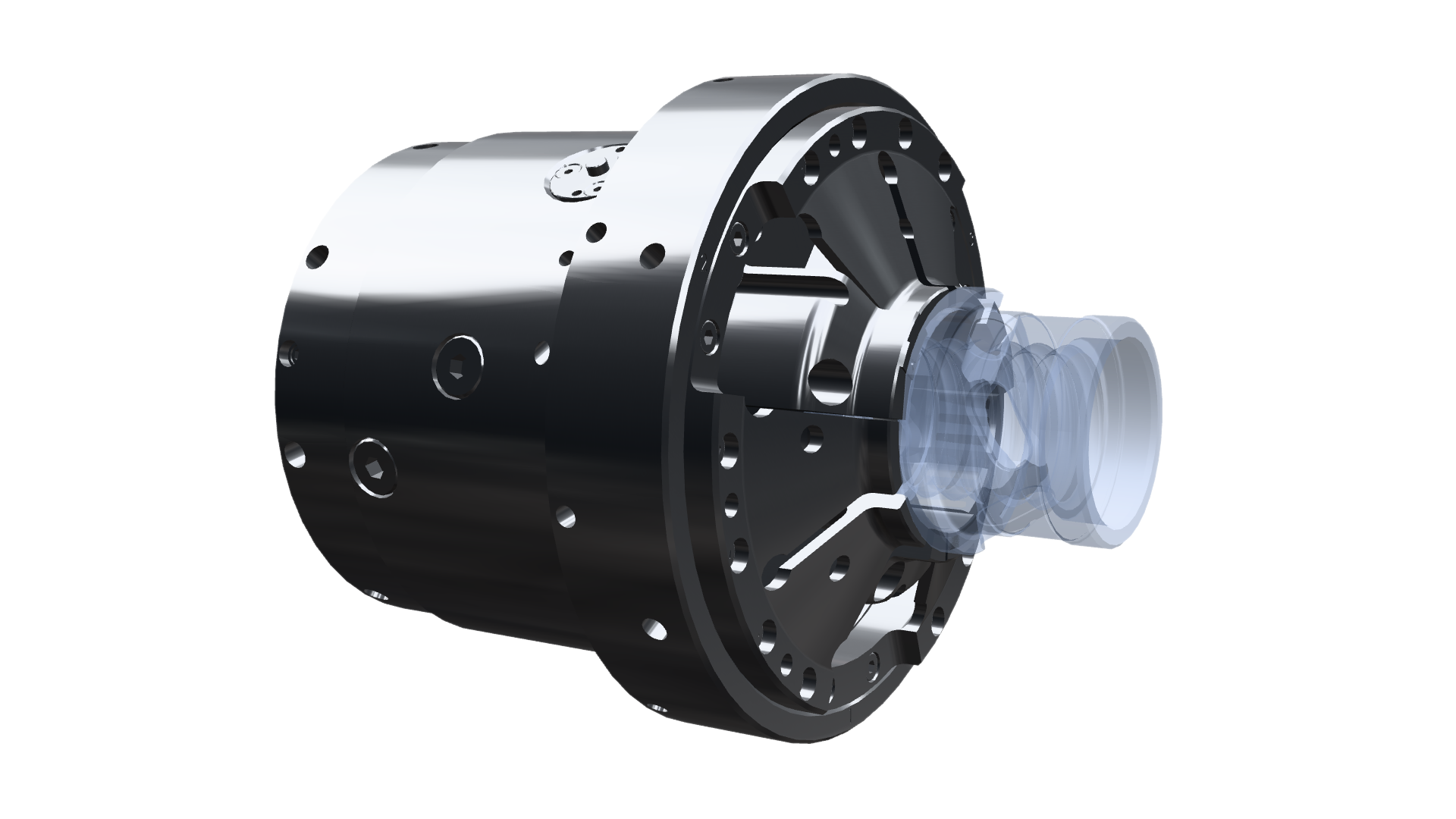


CUSTOMIZED: LIKE THE WORKPIECE ITSELF.
We develop and manufacture our clamping and machining solutions in the same way that high-precision individual parts meet the highest demands in innovative applications: with micrometer precision, smart and precisely tailored to your needs.
Development partner from concept to commissioning.
Whether it’s a new machine, a retrofit, or the modification of existing machine tools, STERMAN supports projects from the initial idea and design through engineering, manufacturing, and assembly to commissioning—and, upon request, well beyond that. With a vertical integration rate of over 85 percent, our solutions are primarily manufactured at our facility in St. Georgen in the Black Forest. For an initial clamping concept, a workpiece drawing and the essential information about the machining process are usually sufficient.


MADE IN THE BLACK FOREST. STERMAN ENGINEERING FOR ROBOTICS.
Custom clamping systems, fixtures, and machines for demanding applications in robotics and precision engineering around the world.
Specific applications demonstrate the levels of precision achieved in practice: JUNKER uses STERMAN membrane clamping technology and custom collet chucks in micro-grinding processes for high-quality robotic joint components, achieving precision in the micrometer range. WITTENSTEIN uses STERMAN solutions for the grinding of high-precision electric motor components in the micrometer range. For SIEMENS, STERMAN manufactures fixtures for the fine calibration of electric motor shafts in the low micrometer range. This level of precision is also in demand in the watchmaking industry: For ROLEX, STERMAN clamping solutions are used in the complete machining of watch cases on INDEX multi-spindle machines with accuracy requirements in the range of 0.01 mm.






STERMAN Expertise:
FAQ – Robotics & Precision Engineering
Why does the manufacturing of robotic and precision components place special demands on clamping technology?
For high-precision joints, motor shafts, gears, or watch components, even deviations in the micrometer range can affect their subsequent function. Clamping technology must therefore not only hold workpieces securely, but also position them with high precision, clamp them with minimal deformation, and ensure that defined reference positions are reproducibly maintained throughout the entire machining process. Workpieces in this industry are often particularly small, complex, or thin-walled.
Which clamping systems are suitable for high-precision components?
The clamping principle is derived from the workpiece geometry, functional surfaces, machining requirements, and tolerances. Depending on the application, systems such as diaphragm chucks, collet chucks, sleeve mandrels, or other high-precision clamping systems may be used. For particularly demanding processes, STERMAN develops customized or combined clamping concepts, ranging all the way up to intelligent mechatronic clamping technology. A particular focus is placed on targeted force application to reduce clamping-induced workpiece deformation to the minimum technically necessary.
How can workpiece deformation be minimized during high-precision clamping?
What matters is not just the magnitude of the clamping force, but where, how, and with what characteristics it is applied to the workpiece. Clamping surfaces, clamping systems, clamping force, and clamping principles are therefore specifically tailored to the geometry and stiffness of the component. This ensures that the workpiece is held securely without the clamping force unnecessarily affecting the geometry to be machined.
What types of workpieces does STERMAN clamp in robotics and precision engineering?
Typical applications range from joints, drive shafts, and motor shafts to gears, bearing rings, and high-precision watch components. What they have in common is not so much the type of component as the high requirements for positioning, concentricity, dimensional and positional accuracy, and repeatability.
What role can PICEA play in μ-precision manufacturing processes?
PICEA makes clamping technology an active part of the manufacturing process. Workpiece position can be detected by sensors and actively corrected with a control resolution of up to 0.5 μm. In this way, PICEA opens up new possibilities—particularly for high-precision manufacturing tasks—not only to detect deviations but also to actively correct workpiece position and intervene specifically in the manufacturing process.