
Devices & mechanical engineering
CUSTOM MANUFACTURING TECHNOLOGY. DESIGNED WITH THE WORKPIECE IN MIND.
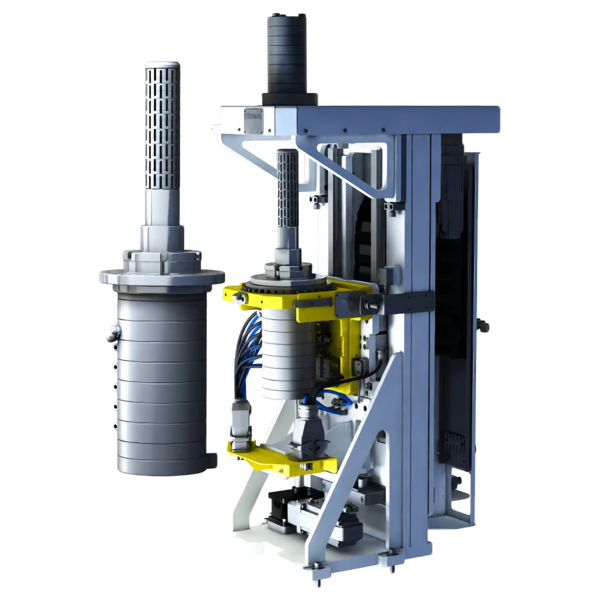
Taking clamping technology to the next level. All the way to the entire machine.
STERMAN fixtures and machines are custom-designed manufacturing solutions for demanding workpieces and complex production processes. They combine clamping technology with micrometer-level accuracy with precise positioning, high dynamics, and intelligent control and monitoring functions. Compact in design, easily integrated into existing manufacturing layouts, and digitally networked upon request, they lay the foundation for efficient, automated, and reliable production processes.
What sets us apart: The starting point for every development is the specific clamping task. STERMAN designs the appropriate fixture around the optimally tailored clamping system—and, if required, handles the development and implementation of the entire machine. As a system supplier, we are responsible for the interaction of mechanical, actuator, sensor, and control technologies—all the way through to a fully operational, CE-compliant production line. This results in customized, comprehensive solutions that are consistently tailored to the requirements of the workpiece and the manufacturing process.
STERMAN EQUIPMENT & MACHINES AT A GLANCE
Design
Custom-designed clamping fixtures, special-purpose machines, and complete manufacturing systems
Positioning Accuracy
Depending on the application, < 0.05 mm
Function
Workpiece clamping, positioning, handling, and process-specific automation using innovative linear technology and robotics
Design
High-quality, dynamic, and weight-optimized machine designs with integrated precision clamping technology and intelligent Industry 4.0 features
Process Integration
Custom integration into existing manufacturing layouts and production processes
Controls & Sensors
Intelligent control functions, condition monitoring, and digital connectivity as required
System Expertise
Comprehensive development and project management, from the clamping task to the fully operational system
Conformity
Project-specific conformity assessment and CE marking in accordance with the applicable EU legislation, including the EU Machinery Regulation (EU) 2023/1230, effective January 20, 2027
μ-THINKING®- for customized high-end production technology.
The STERMAN MDS80 center-drive spindle is a compact center-drive spindle designed for the simultaneous complete machining of drive shafts, rotor shafts, and gear shafts on CNC lathes and grinding machines. Its unique clamping design allows the workpiece to be driven in the center of the shaft, thereby providing unobstructed access to both ends of the workpiece. The precise center mounting ensures reproducible centering and reliable torque transmission. This allows machining steps on both sides of the shaft to be efficiently combined—resulting in short cycle times, fewer setup changes, and high machining accuracy.
The STERMAN MDS170 center-drive spindle is a hydraulically actuated precision center-drive spindle for the simultaneous complete machining of drive shafts, rotor shafts, and electric mobility components on CNC lathes and grinding machines. Its hydraulic clamping system enables precise, powerful workpiece clamping in the center of the shaft, while both ends of the workpiece remain accessible for machining. Precise center alignment ensures reproducible workpiece positioning and reliable torque transmission. As a result, the MDS170 combines high clamping stability with tool accessibility on both sides—enabling efficient machining processes, reduced setup changes, and high manufacturing accuracy.
The STERMAN MDS230 center-drive spindle is a high-performance, precision center-drive spindle for the simultaneous complete machining of drive shafts, transmission shafts, and rotor shafts in automotive and electric mobility applications. Its central clamping design enables stable torque transmission in the mid-shaft range, while both ends of the workpiece remain freely accessible for machining. The robust spindle design ensures precise, repeatable workpiece clamping even during demanding machining processes. As a result, the MDS230 combines high drive power with efficient machining on both sides—reducing setup changes, shortening cycle times, and ensuring reliable manufacturing accuracy.
The STERMAN MDS300 center-drive spindle is a high-performance center-drive spindle for the simultaneous complete machining of large drive shafts, axle shafts, and rotor shafts in the automotive and commercial vehicle industries. Its robust clamping design enables reliable torque transmission in the central shaft area, while both ends of the workpiece remain freely accessible for machining. The precisely guided workpiece holder ensures stable centering even for large-dimensioned shaft components. Thus, the MDS300 combines high load capacity with efficient machining on both sides—resulting in fewer setup changes, short cycle times, and reproducible manufacturing quality.
The STERMAN SK Clamping Tower is a high-precision clamping and fixturing solution for the automated machining of rotor vanes, stator packs, and electric motor components in electric vehicle manufacturing. Its vertical design combines a workpiece-specific clamping system with stable guidance and positioning of the components. The compact integration of clamping technology and fixture mechanics enables precise, repeatable workpiece clamping with good accessibility for machining. In this way, the clamping tower supports efficient production processes and reliable machining of complex laminate and stack geometries.
The STERMAN SK clamping device is a high-precision, multi-point clamping solution for low-deformation complete machining of clutch housings, differential housings, and transmission housings on CNC milling machines with rotary tables. Its workpiece-specific clamping concept combines several strategically arranged clamping points with precise centering and defined workpiece positioning. The controlled distribution of clamping forces ensures dimensionally stable fixation of complex housing geometries while maintaining high tool accessibility. As a result, the fixture enables reproducible machining from various approach angles—resulting in fewer setup changes, high dimensional accuracy, and efficient manufacturing processes.
The STERMAN SK clamping device is a high-precision face-clamping solution for the fully automated grinding of industrial, paper, and film cutting blades on CNC grinding machines. Its longitudinally arranged, individually adjusted clamping points enable uniform fixation of elongated blade bodies along the machining surface. The precisely guided clamping mechanism ensures controlled force application and reduces stress-induced deformation during the grinding process. In this way, the fixture lays the foundation for reproducible plane-parallelism, consistent grinding results, and a reliable, automated blade production process.
STERMAN Quality Assurance:
Highest quality thanks to strict controls.
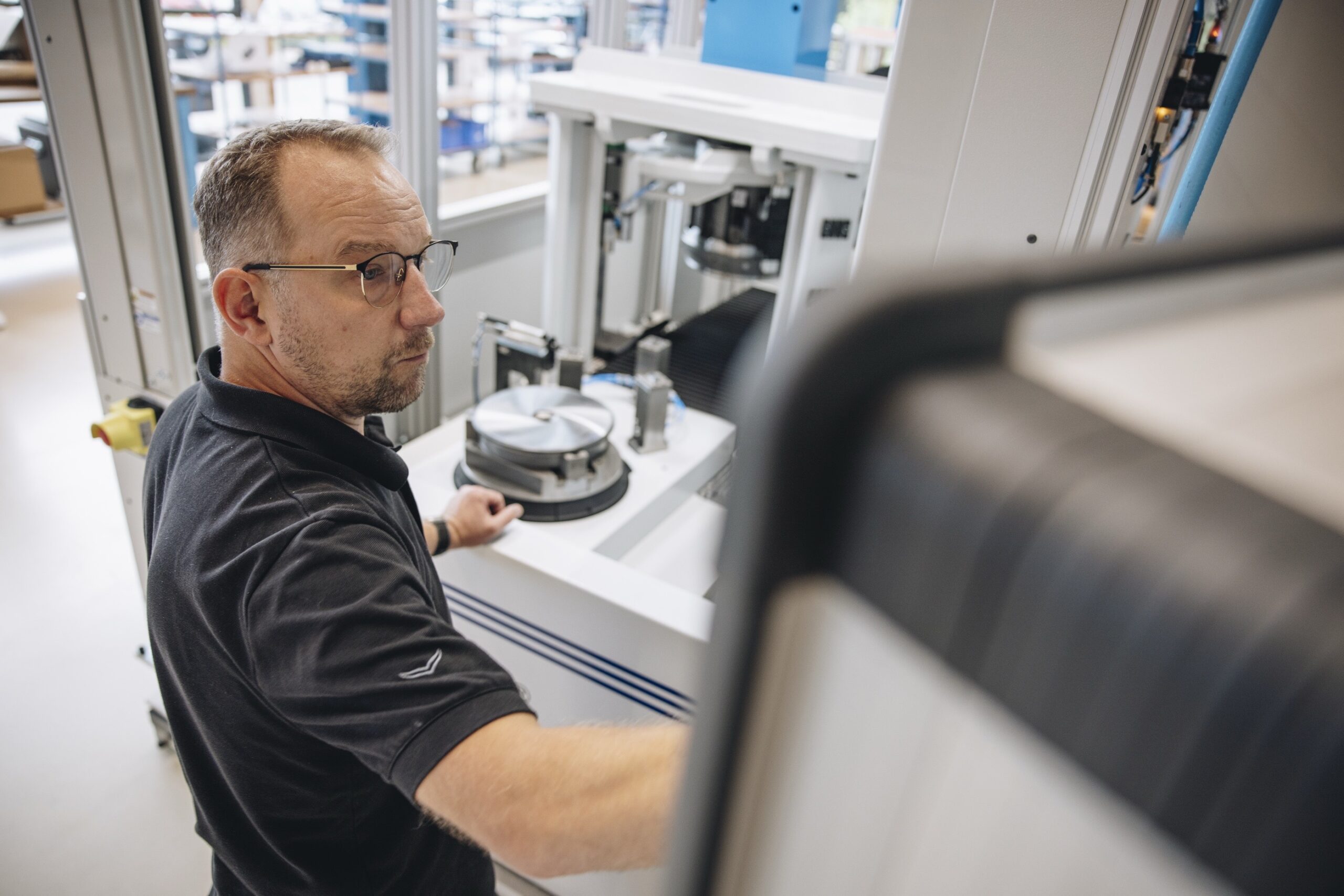
At STERMAN, high-end quality with precision down to 0.001 mm is no accident. Our quality management system is certified to DIN EN ISO 9001, and every system undergoes two stages of testing before shipment:
- Before assembly: 100% inspection of individual parts on our LEITZ PMM 866 coordinate measuring machine
- After assembly: comprehensive functional and endurance testing on our own test benches
“We inventors from the Black Forest have always had a high technological influence on progress within many industries – worldwide. Our high level of specialization is a guarantee for both technical challenges and sustainable business – and therefore future security.”
Johannes Sterman, Managing Director
Development partner from concept to commissioning.
Whether it’s a new machine, a retrofit, or the modification of existing machine tools, STERMAN supports projects from the initial idea and design through engineering, manufacturing, and assembly to commissioning—and, upon request, well beyond that. With a vertical integration rate of over 85 percent, our solutions are primarily manufactured at our facility in St. Georgen in the Black Forest. For an initial clamping concept, a workpiece drawing and the essential information about the machining process are usually sufficient.


STERMAN Expertise:
FAQ – Fixtures & Mechanical Engineering
What is the difference between a clamping device and a clamping system?
A clamping system ensures the precise positioning, centering, and secure fastening of a workpiece during machining. A clamping device goes a step further: It integrates the clamping system into a structurally coordinated functional unit and establishes the mechanical and functional prerequisites for the respective manufacturing process.
These may include, for example, base bodies, workpiece stops, guides, positioning elements, and additional lifting, swiveling, or adjustment functions. Depending on the application, media supply systems, sensors, and automated actuation sequences can also be integrated directly into the fixture.
The key difference, therefore, lies in the range of functions: While the clamping system ensures the actual clamping of the workpiece, the clamping device combines this with the necessary holding, positioning, and motion functions.
STERMAN develops custom clamping fixtures in which all components are specifically tailored to the workpiece geometry, machine tool, and machining process. This results in compact, high-precision, and process-reliable solutions for demanding manufacturing tasks.
When is a custom-designed clamping device or special-purpose machine a good choice?
A custom-designed clamping device or special-purpose machine is particularly useful when the requirements of a workpiece or manufacturing process cannot be adequately or cost-effectively met using standardized machine and fixture designs.
Typical challenges include complex workpiece geometries, specialized machining and positioning movements, multiple coordinated process steps, or high requirements for precision, cycle time, and automation. Limited installation conditions or the integration of special clamping and measuring functions may also necessitate a custom design.
The key advantage lies in the holistic design approach: Rather than combining individual components after the fact, clamping technology, motion axes, spindle assemblies, media supply, and—where applicable—control and automation functions are considered as an integrated system from the very beginning.
To this end, STERMAN develops workpiece- and process-specific solutions that specifically meet technical requirements, reduce interfaces, and enable reproducible, cost-effective manufacturing processes.
What functions can be integrated into a clamping device or custom machine?
Modern clamping devices and special-purpose machines can do much more than simply hold and secure a workpiece. Depending on the manufacturing task, various mechanical, hydraulic, pneumatic, electrical, and mechatronic functions can be integrated into a single design.
These include, for example, multiple clamping systems, precise workpiece stops, lifting, swiveling, and positioning movements, as well as integrated media guides. In addition, sensors, measuring systems, automated workpiece changes, and interfaces to the machine control system can be integrated.
The functional integration of these elements is particularly interesting: For example, workpiece positioning, clamping, condition monitoring, and subsequent machining can all work together in a defined sequence. This reduces the need for manual intervention and creates repeatable process conditions.
STERMAN develops such combinations of functions on a case-by-case basis, tailored to the specific workpiece and process requirements. The result is compact, technically optimized fixtures and machine solutions that reliably integrate various manufacturing tasks.
How can clamping devices and special-purpose machines be automated?
Ideally, the automation of clamping devices and special-purpose machines begins as early as the design phase. It is crucial that workpiece mounting, clamping functions, motion sequences, and control interfaces be tailored from the outset to a reproducible and automatable process.
Depending on the application, automatic clamping and unclamping functions, sensor-monitored workpiece positioning, integrated media supply, and defined feedback to the machine control system can be implemented. Industrial robots, collaborative robots, or gantry systems can also be integrated for automated loading and unloading.
Process monitoring plays a particularly important role: For example, sensors can detect clamping conditions, end positions, or the presence of workpieces, thereby laying the foundation for monitored, reproducible processes.
STERMAN combines customized clamping and fixture technology with the necessary automation functions to create integrated manufacturing solutions. This reduces manual tasks, shortens setup and non-productive times, and lays the groundwork for cost-effective, reliable manufacturing processes.
Does STERMAN also develop complete custom machines and custom manufacturing equipment?
Yes. In addition to high-precision clamping systems and spindle assemblies, STERMAN also develops complete special-purpose machines and custom manufacturing equipment for demanding industrial production processes.
Our range of services extends from custom clamping and machining fixtures to specialized individual workstations, automated manufacturing cells, and more complex production solutions. Depending on the task at hand, clamping technology, spindle assemblies, mechanical motion functions, media supply, and automation, control, and safety technology are integrated into a functionally coordinated complete system.
The focus is not on individual components, but rather on the technical and economic optimization of the entire manufacturing process. Workpiece handling, positioning, clamping, machining, and—where applicable—measurement or inspection processes are coordinated as early as the development phase.
STERMAN supports such projects from the technical design and engineering phases through manufacturing and assembly all the way to commissioning. This results in customized machine and fixture solutions that are specifically tailored to the requirements of the respective workpiece and production process.
What retrofit and modernization solutions does STERMAN offer for existing machines?
STERMAN develops customized retrofit solutions that enable existing machine tools and manufacturing systems to be technically modernized and adapted to changing production requirements. The goal is to enhance existing machine resources in a targeted manner without necessarily having to make a completely new investment.
Depending on the machine design, components such as clamping systems, spindle assemblies, media feed-throughs, sensors, or additional automation functions can be retrofitted. The integration of modern control and monitoring technologies can also improve existing manufacturing processes in terms of precision, repeatability, and process reliability.
With its intelligent PICEA technology, STERMAN also opens up possibilities for expanding suitable existing machines to include mechatronic clamping functions, digital process monitoring, and bidirectional energy and data transmission. This requires appropriate technical coordination with the existing machine architecture.
The key advantage of a custom-designed retrofit lies in the targeted modernization of existing functional units. This allows existing systems to be adapted to new workpieces, higher quality requirements, and increasing automation demands—while continuing to utilize existing machinery investments.