
Alternative energies
TECHNOLOGY FOR MAXIMUM EFFICIENCY.
Modern energy and plant engineering places high demands on the efficiency, service life, and reliability of its components. Large component dimensions, high forces and torques, challenging materials, and tight tolerances for form, position, and concentricity make their precise manufacturing particularly demanding. Whether it’s plain bearings and bearing sleeves, rotor shafts, drive components, or motor and gearbox housings: clamping technology precisely tailored to the workpiece and machining process lays the foundation for reproducible quality and reliable components in high-performance energy systems.
STERMAN develops custom clamping systems and production technology for sophisticated components used in the energy and plant engineering sectors. Depending on the manufacturing task, the focus is on the high-precision centering of rotationally symmetric components, low-deformation clamping, high force and torque transmission, optimal workpiece accessibility, or the integration of multiple machining and automation steps. From diaphragm clamping systems, sleeve mandrels, and collet chucks to custom spindle assemblies and fixtures, all the way to complex special-purpose machines and the intelligent PICEA clamping technology, we create solutions that are consistently developed based on workpiece geometry and the manufacturing process.
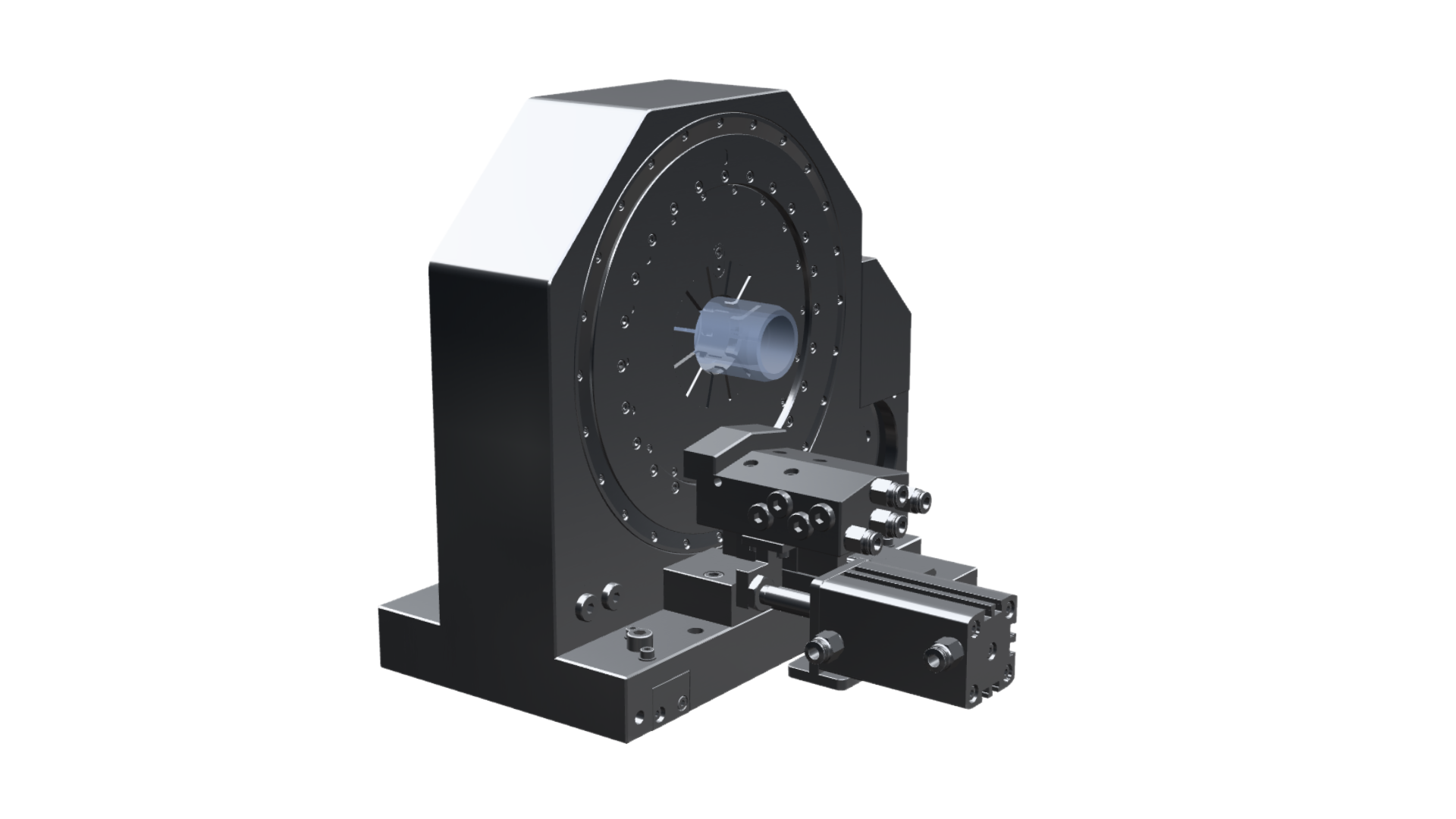


CUSTOMIZED: LIKE THE WORKPIECE ITSELF.
We develop and manufacture our clamping and machining solutions in the same way that high-precision individual parts meet the highest demands in innovative applications: with micrometer precision, smart and precisely tailored to your needs.
Development partner from concept to commissioning.
Whether it’s a new machine, a retrofit, or the modification of existing machine tools, STERMAN supports projects from the initial idea and design through engineering, manufacturing, and assembly to commissioning—and, upon request, well beyond that. With a vertical integration rate of over 85 percent, our solutions are primarily manufactured at our facility in St. Georgen in the Black Forest. For an initial clamping concept, a workpiece drawing and the essential information about the machining process are usually sufficient.


MADE IN THE BLACK FOREST. STERMAN ENGINEERING FOR ENERGY.
Custom clamping systems, fixtures, and machines for demanding applications in the energy and plant engineering sectors around the world.
Specific applications demonstrate the breadth of this expertise: For MAN Energy Solutions, STERMAN manufactures large, custom clamping systems for the high-precision machining of turbine drive components with tolerances in the range of 0.01 mm. At ZIEHL-ABEGG, STERMAN sleeve clamping mandrels and collet chucks are used for machining drive components of electric motors with accuracy requirements in the micrometer range. For Voit, STERMAN develops multi-clamping systems for the precise machining of aluminum housings for electric motors with tolerances in the range of 0.01 mm. For an application in wind energy technology, STERMAN also develops custom-designed diaphragm and hydro-expansion clamping systems for the complete machining of plain bearing bushings with tolerances in the micrometer range.




STERMAN Expert Knowledge:
FAQ – Alternative Energy Sources
What requirements do energy and plant engineering place on modern clamping systems?
Components for modern energy systems can feature large dimensions and high masses, as well as thin-walled structures or tight tolerances for form, position, and concentricity. Added to this are high forces and torques, as well as challenging materials. Complex geometries—such as those found in slide bearing sleeves for wind energy applications—also place special demands on workpiece clamping. Clamping technology must therefore be precisely tailored to the workpiece and the machining process and enable reproducible quality even under demanding manufacturing conditions.
Which clamping systems are suitable for components in modern energy systems?
Depending on the workpiece, systems such as diaphragm clamping systems, sleeve mandrels, collet chucks, hydraulic expansion clamping systems, or custom-combined clamping concepts may be used. Spindle assemblies, fixtures, and special-purpose machines can also be part of the solution. The appropriate principle is determined by the workpiece’s geometry, material, machining process, and required accuracy.
How can large or thin-walled components be clamped with precision and minimal deformation?
By applying clamping forces specifically tailored to the component’s rigidity and combining various established clamping principles. Systems, clamping ranges, and clamping forces are designed to ensure that the workpiece is held securely without unnecessarily affecting its geometry. Therefore, especially with large or thin-walled components, the overall interaction between the workpiece, the clamping system, and the machining process must be taken into account.
How can complex geometries be clamped reliably?
The more complex the geometry, the more important it is to have defined reference points, targeted force application, and sufficient machining clearance. STERMAN therefore develops the clamping concept directly based on the workpiece and the required machining steps. This allows even unusual geometries to be positioned reproducibly and kept optimally accessible for machining.
How can clamping technology adapt to new drive and energy concepts?
New technologies are changing workpieces, materials, production volumes, and manufacturing processes—and, consequently, the requirements for clamping technology. That is why STERMAN does not develop rigid industry-specific solutions, but rather application-specific systems that take into account workpiece geometry, precision, machining sequences, and the degree of automation as a whole. This allows clamping technology to evolve alongside new production strategies and generations of components.