
Clamping systems
PRECISE, CUSTOM-MADE CLAMPING SOLUTIONS FOR DEMANDING WORKPIECES.
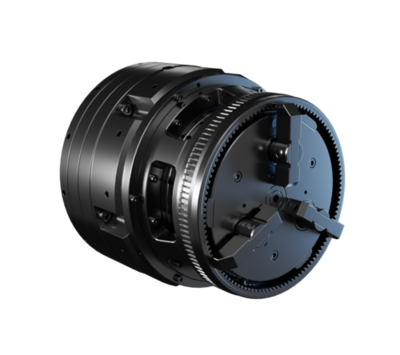
Clamping technology that thinks ahead.
STERMAN clamping systems are custom-designed precision clamping solutions for complex workpiece geometries and high-precision machining processes. They reliably position, center, and secure workpieces, and with centering accuracies of < 0.01 mm, they lay the foundation for precise, repeatable, and process-reliable machining. At the same time, they allow for maximum tool clearance and can be precisely monitored and automated using intelligent sensor technology and control systems.
What sets us apart: Every STERMAN clamping system is consistently designed, developed, and manufactured based on the individual workpiece geometry and the specific requirements of the machining process. Through structurally optimized lightweight construction, precise fine balancing, and the intelligent integration of mechanical, hydraulic, pneumatic, and sensor-based functions, we create customized clamping solutions that combine the highest precision with efficient use of resources, high process reliability, and dependable operability.
AN OVERVIEW OF STERMAN'S CLAMPING TECHNOLOGY
Design
Custom-designed precision clamping systems with application-specific centering accuracies of < 0.01 mm
Clamping Principles
Mechanical, hydraulic, pneumatic, and electrical workpiece clamping—depending on the application
Clamping Concepts
Internal, external, and combined clamping for complex workpiece geometries and machining processes
Design
Installation space- and weight-optimized clamping systems with optimized tool accessibility
Process Integration
Customization to the workpiece, machine tool, and machining process
Sensors & Automation
Integration of clamping status monitoring and automated clamping functions as required
Engineering
Tailored to clamping forces, rotational speeds, workpiece geometries, and process-specific loads
Conformity
Design in accordance with the requirements of the EU Machinery Regulation (EU) 2023/1230, to the extent applicable to the respective clamping system
μ-THINKING®- for customized high-end production technology.
The STERMAN PFB (ROTA MEM) diaphragm chuck is a precision clamping system developed in collaboration with SCHUNK for automated series production. Its modular design enables high-precision tip-circle, pitch-circle, and form clamping while allowing flexible adaptation to different workpiece geometries. The elastic diaphragm ensures uniform, workpiece-friendly clamping force transmission and supports high concentricity and repeatability in the micrometer range. Thus, the compact modular system combines precise workpiece clamping with high process reliability—especially in demanding turning, grinding, and measuring applications.
The STERMAN PFM diaphragm chuck is a high-precision clamping system designed for holding and machining ball-screw nuts. Its diaphragm-based clamping principle enables uniform, workpiece-friendly force transmission with exceptionally high repeatability. The elastic deformation of the diaphragm reduces the need for moving clamping mechanisms, thereby supporting low-wear, reproducible clamping operations. The compact design can be seamlessly integrated into automated manufacturing processes and combines precise workpiece positioning with high process reliability—even under the demanding conditions of high-volume production.
The STERMAN PFG sliding-jaw chuck is a high-precision internal clamping system designed for low-deformation machining of hollow shafts, rotor carriers, and thin-walled gear sleeves on CNC lathes and grinding machines. Its distinctive clamping principle utilizes radially movable sliding jaws that center and securely hold the workpiece from the inside. The workpiece-specific design of the clamping surfaces allows for precise adaptation to various internal geometries. In this way, the PFG combines precise, repeatable workpiece clamping with high machining accuracy and reliable process reliability—especially for components where deformation is a critical concern.
The STERMAN PFG sliding-jaw chuck is a high-precision internal clamping system designed for low-deformation machining of pistons for internal combustion engines, hybrid powertrains, and generators. Its radially movable, workpiece-specific sliding jaws enable precise centering and secure clamping via the piston’s internal geometry. This keeps sensitive external contours freely accessible for machining while minimizing unwanted workpiece deformation. The custom-tailored clamping geometry ensures reproducible machining results and high process reliability on CNC lathes and grinding machines.
The STERMAN PFR Centering and Face Clamping Mandrel is a high-precision clamping system designed for low-deformation machining of gears, rotor carriers, and brake discs on CNC lathes and grinding machines. Its unique clamping design combines radial workpiece centering with axial face contact, enabling precise positioning in both directions. The workpiece-specific clamping and contact surfaces ensure a secure, repeatable hold with minimal component deformation. In this way, the PFR creates optimal conditions for high concentricity and parallelism accuracies in demanding machining processes.
The STERMAN SK cantilever clamping system is a high-precision clamping solution for low-deformation machining of gears, differential housings, and rotor carriers on CNC lathes and grinding machines. Its unique clamping concept combines precise internal centering with axial face clamping, thereby enabling defined workpiece positioning with minimal risk of deformation. The open cantilever design provides ample clearance for the workpiece and tool and facilitates the machining of complex geometries. Custom-tailored clamping and contact surfaces ensure reproducible workpiece mounting and high process reliability.
The STERMAN PFM membrane chuck is a high-precision clamping system designed for low-deformation machining of gears, synchronizer bodies, and thin-walled gear wheels. Through the elastic deformation of the diaphragm, clamping forces are transmitted evenly and gently to the workpiece across the clamping surfaces. This minimizes unwanted component deformation and enables precise, repeatable workpiece centering. The compact design, tailored to the specific workpiece geometry, supports low-wear clamping processes and reproducible machining results on CNC lathes, grinders, and gear-cutting machines—even when facing demanding requirements for concentricity and surface quality.
The STERMAN PFR/PFR double-sleeve chuck is a high-precision internal clamping system designed for low-deformation machining of hollow shafts, rotor shafts, and thin-walled gear shafts on CNC lathes and grinding machines. Its distinctive feature is two axially offset clamping planes, which enable precise centering and clamping of elongated workpieces. The clamping sleeves, which are tailored to the respective internal geometry, ensure uniform force transmission and minimize unwanted workpiece deformation. As a result, the system combines stable, repeatable workpiece clamping with high concentricity and process reliability for demanding machining tasks.
The STERMAN PFG sliding-jaw chuck is a high-precision clamping system with a workpiece-specific prismatic mounting for the automated remanufacturing of kerosene injection nozzles and combustion chamber components in the aerospace industry. Its precisely guided sliding jaws enable defined centering and secure clamping of complex component geometries. The custom-adapted prismatic clamping surfaces support reproducible workpiece positioning while ensuring excellent accessibility for machining. In this way, the system lays the foundation for reliable refurbishment processes on CNC turning and laser machining centers—even when dealing with demanding geometric requirements.
The STERMAN PFG/PFG sliding-jaw chuck is a high-precision four-jaw clamping system designed for powerful, low-deformation machining of drive shafts, rotor shafts, and cardan shafts on CNC lathes and grinding machines. Its two axially arranged clamping planes enable precise centering and secure clamping, even for longer workpieces. The sliding jaws, individually tailored to the workpiece geometry, ensure targeted clamping force transmission with minimal deformation. As a result, the system combines high concentricity with reproducible machining results and reliable process reliability.
The STERMAN PFR sleeve-type chuck is a high-precision internal clamping system for the complete machining of gears, synchronizer bodies, and rotor carriers on CNC lathes and grinding machines. Its distinctive feature is the retractable workpiece stop, which clears the machining area after the workpiece has been precisely positioned. This allows even hard-to-reach contours to be machined without collision risk and without releasing the workpiece clamping. The custom-fitted clamping sleeve ensures reproducible centering and low-deformation clamping—for high machining accuracy and efficient production processes.
The STERMAN PFG pull-down chuck is a high-precision clamping system designed for low-deformation machining of truck brake discs, gear rings, and rotor carriers on CNC lathes and grinding machines. Its unique clamping principle combines radial workpiece centering with an axial pull-down function. This ensures that the workpiece is pulled precisely against the face plate during clamping while being securely centered at the same time. The workpiece-specific clamping surfaces enable controlled force transmission with minimal tendency toward deformation. This creates reproducible clamping conditions for high concentricity and runout accuracy in demanding machining processes.
The STERMAN PZF Centering and Face-Clamping Chuck is a high-precision, passive clamping system designed for low-deformation machining of differential housings, axle gear housings, and planetary carriers on CNC lathes. Its clamping concept combines defined workpiece centering with axial face contact, thereby enabling the precise clamping of complex housing geometries. The workpiece-specific clamping and contact surfaces support reproducible positioning with controlled force application. This makes the system particularly suitable for demanding machining processes in automated production lines where dimensional accuracy and process reliability are critical.
The STERMAN PFB Centering and Face Clamping Mandrel is a high-precision internal clamping system designed for low-deformation machining of thin-walled electric motor housings, e-axle housings, and battery cooling housings on CNC lathes and milling machines. Its clamping concept combines precise internal centering with a defined axial face contact. The workpiece-specific clamping and contact surfaces enable controlled force transmission and reduce the risk of geometric deformation. In this way, the system supports dimensionally accurate, repeatable machining of sensitive housing structures—especially when there are high requirements for concentricity, parallelism, and form accuracy.
The STERMAN PFB Centering and Face Clamping Mandrel is a high-precision clamping system with internal face clamping fingers designed for low-deformation machining of bearing rings, synchronizer bodies, and rotor supports on CNC lathes and grinders. Its clamping concept combines precise internal centering with axial fixation via workpiece-specific clamping fingers. This functionally separates the radial centering forces from the axial workpiece clamping. This enables controlled force application with high tool accessibility—ensuring reproducible concentricity and axial runout accuracies even for sensitive ring geometries.
The STERMAN PFG Centering and Face-Clamping Chuck is a high-precision three-jaw clamping system designed for low-deformation machining of cam rings, eccentric rings, and control components on CNC lathes and grinding machines. Its workpiece-specific sliding jaws combine precise radial centering with defined axial workpiece fixation. This allows even complex, non-rotationally symmetric component geometries to be reproducibly accommodated and securely clamped. The targeted clamping force transmission helps ensure compliance with tight form and position tolerances—for high machining accuracy and reliable process reliability.
The STERMAN PFG Centering and Face-Clamping Chuck is a high-precision combination clamping system designed for low-deformation machining of shift levers, control levers, and electromechanical actuator levers on CNC milling and machining centers. Its clamping design combines precise two-jaw centering with an additional face clamping finger for axial workpiece fixation. The functional separation of centering and clamping allows for targeted force application to sensitive lever geometries. This enables even asymmetrical components to be positioned reproducibly and machined reliably—with high tool accessibility and reliable process reliability.
The STERMAN PFB Centering and Face-Clamping Chuck is a high-precision clamping system designed for low-deformation machining of indexing gears, synchronizer rings, and gear rims on CNC lathes and gear-cutting machines. Its unique clamping concept combines precise pitch circle centering with swiveling face clamping fingers for axial workpiece fixation. The clamping fingers enable targeted force transmission while also providing the necessary clearance for machining complex tooth profiles. Thus, the system combines repeatable workpiece positioning with high tool accessibility—ensuring dimensional accuracy and reliable process reliability for complex gear geometries.
The STERMAN PFR Centering and Face-Clamping Mandrel is a high-precision clamping system for low-deformation complete machining of turbocharger housings, turbine housings, and compressor housings on CNC lathes and milling machines. Its distinctive feature is the asymmetrical arrangement of the face-clamping fingers, which enables precise axial fixation of complex, irregularly shaped housings. In combination with precise workpiece centering, this results in a customized clamping force distribution. As a result, contours relevant to machining remain easily accessible, while sensitive housing structures are clamped securely and with minimal deformation—ensuring reproducible machining results.
The STERMAN PFG Centering and Face-Clamping Chuck is a high-precision clamping system designed for low-deformation finishing of thin-walled electric motor housings, inverter housings, and e-axis housings on CNC lathes and milling machines. Its distinctive feature is the integrated hydraulic damping, which reduces unwanted vibrations during machining. The workpiece-specific clamping surfaces combine precise centering with defined axial fixation. In this way, the system supports smooth, repeatable machining of delicate housing structures—ensuring high dimensional and surface quality with minimal workpiece deformation.
The STERMAN PFR Centering and Face-Clamping Chuck is a high-precision clamping system designed for low-deformation complete machining of torque converter housings and clutch housings on CNC lathes. Its six face-clamping fingers, arranged specifically for the workpiece, enable uniform axial clamping with precise centering. Integrated centrifugal force damping elements counteract speed-induced vibrations and ensure a stable machining process. The targeted distribution of clamping forces protects sensitive housing structures and creates the conditions for reproducible, dimensionally accurate machining—even with complex contours and high surface quality requirements.
The STERMAN SK Swivel Chuck is a high-precision vacuum clamping system designed for low-deformation machining of hip cups, acetabular components, and orthopedic implants on CNC milling machines and 5-axis machining centers. Its workpiece-specific vacuum mounting system enables gentle clamping of delicate, curved component geometries without the need for conventional clamping jaws. The integrated swivel function supports flexible workpiece alignment and improves accessibility for complex machining operations. The system thus combines surface-protective workpiece clamping with a high degree of machining freedom—for precise contours and reproducible manufacturing processes in medical technology.
The STERMAN PFM diaphragm chuck is a high-precision clamping system designed for low-deformation machining of headpieces and precision mechanical components on BENZINGER precision lathes and CNC lathes. Its elastic diaphragm clamping principle enables sensitive, repeatable clamping force transmission to delicate workpiece geometries. The workpiece-specific clamping surfaces ensure precise centering and secure fixation with minimal risk of deformation. Thanks to its compact design, the system supports the machining of delicate contours and lays the foundation for high dimensional accuracy, surface finish, and reliable repeatability in precision manufacturing.
The STERMAN PFG sliding-jaw chuck is a fully stainless-steel three-jaw stepped chuck designed for the automated cleaning, rinsing, and drying of converter turbines and torque converters. Its stepped clamping jaws enable workpiece-specific mounting and secure fixation of complex, rotationally symmetric components throughout the entire cleaning process. The fully corrosion-resistant design is specifically engineered for continuous contact with aggressive cleaning media. As a result, the system combines reliable workpiece clamping with high resistance to cleaning media and reproducible positioning—ensuring process reliability in automated cleaning systems.
The STERMAN PFG sliding-jaw chuck is a high-precision clamping system for the fully automated measurement and quality inspection of aluminum and steel rims in production lines and robotic cells. Its eight or twelve stepped clamping jaws enable uniform, workpiece-friendly clamping of various rim geometries. The precisely guided sliding jaws ensure reproducible centering and stable positioning during the measurement process. In this way, the system lays the foundation for reliable test results, short handling times, and efficient integration into automated quality assurance processes in rim production.
The STERMAN SK balancing fixture is a high-precision clamping system for the repeatable mounting and balancing of rotors, brake discs, and turbocharger components on SCHENCK and ZOLLER balancing machines. Its workpiece-specific design enables precise centering and secure clamping of rotating components during the balancing process. Thanks to its defined positioning, clamping and positional deviations that could affect the results are kept to a minimum. In this way, the system lays the foundation for reliable unbalance measurements, repeatable test results, and efficient quality assurance for sophisticated rotating components.
PFB MEMBRANE CHUCK – MODULAR PRECISION IN THE MICROMETER RANGE.
In collaboration with SCHUNK SE & Co. KG, STERMAN developed the PFB diaphragm chuck and systematically optimized it for mass production. The compact, automatable modular system enables high-precision tip-circle, pitch-circle, and form clamping, and can be flexibly adapted to a wide variety of workpiece geometries.
Its particular strength: the uniform, workpiece-friendly transmission of clamping force via an elastic membrane. The system thus combines the highest requirements for concentricity, dimensional stability, and surface quality in the micrometer range with high repeatability and process reliability—ideal for demanding turning, grinding, and measuring applications.
STERMAN Quality Assurance:
Highest quality thanks to strict controls.
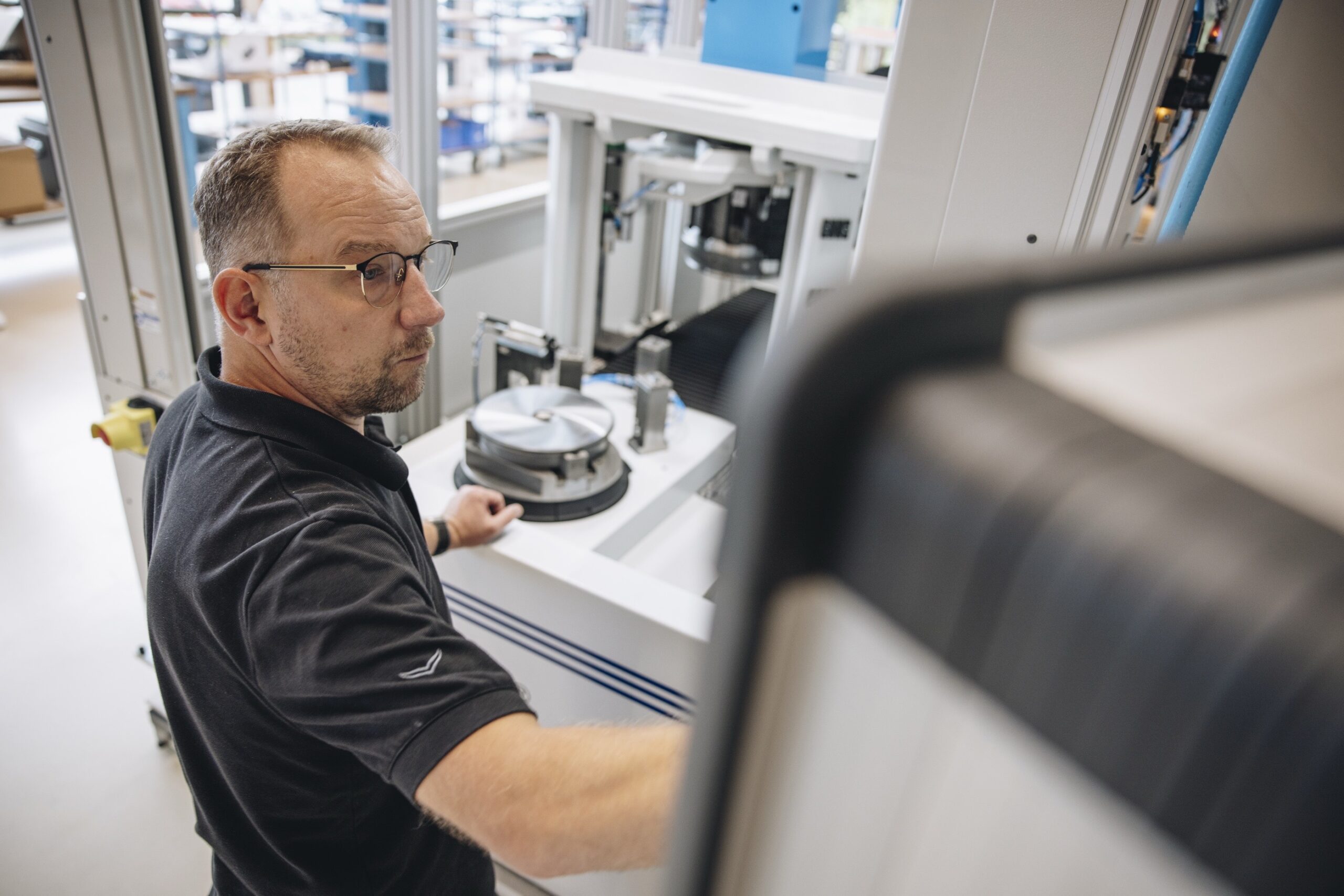
At STERMAN, high-end quality with precision down to 0.001 mm is no accident. Our quality management system is certified to DIN EN ISO 9001, and every system undergoes two stages of testing before shipment:
- Before assembly: 100% inspection of individual parts on our LEITZ PMM 866 coordinate measuring machine
- After assembly: comprehensive functional and endurance testing on our own test benches
Development partner from concept to commissioning.
Whether it’s a new machine, a retrofit, or the modification of existing machine tools, STERMAN supports projects from the initial idea and design through engineering, manufacturing, and assembly to commissioning—and, upon request, well beyond that. With a vertical integration rate of over 85 percent, our solutions are primarily manufactured at our facility in St. Georgen in the Black Forest. For an initial clamping concept, a workpiece drawing and the essential information about the machining process are usually sufficient.


“We inventors from the Black Forest have always had a high technological influence on progress within many industries – worldwide. Our high level of specialization is a guarantee for both technical challenges and sustainable business – and therefore future security.”
Johannes Sterman, Managing Director
STERMAN Expertise:
FAQ – Clamping Systems
What is meant by "custom clamping technology," and what advantages does it offer?
Custom clamping technology refers to the workpiece- and process-specific development of clamping systems for the precise positioning, centering, and secure clamping of workpieces. Unlike standardized clamping solutions, these systems are specifically tailored to the part geometry, the material, the machine tool, and the respective machining requirements.
The focus is on the optimal interaction between the clamping principle, clamping force, workpiece mounting, and machining process. Depending on the application, different clamping functions can be combined to precisely mount even complex geometries or particularly delicate components with minimal deformation.
STERMAN develops custom clamping systems as an integral part of the manufacturing process. This results in tailor-made solutions that enable high machining accuracy, reproducible clamping conditions, and cost-effective production of complex workpieces.
How does clamping technology affect the precision and quality of a workpiece?
Clamping technology has a significant impact on the achievable machining quality, as it determines the position and mechanical stress on the workpiece during manufacturing. Even minor centering deviations, uneven clamping forces, or elastic workpiece deformations can have a direct impact on concentricity, coaxiality, parallelism, and form and position tolerances.
The behavior of delicate or thin-walled components is particularly critical: If a workpiece is deformed by the clamping force during machining, it may spring back to its original shape once the clamping force is released. This results in dimensional and geometric deviations, even though the machining was performed precisely while the workpiece was clamped.
A workpiece-specific clamping solution therefore takes into account not only the required holding force, but also its distribution, the support conditions, and the component’s deformation behavior. This lays the foundation for reproducible machining results, reduced risk of scrap, and consistently high process stability.
What are the different clamping principles, and when are they used?
In industrial precision manufacturing, various clamping methods are used, the suitability of which depends on the workpiece geometry, material, machining task, and required accuracy.
Established clamping methods include collet and sleeve clamping, sliding jaw and diaphragm clamping, and hydro-expansion clamping. In addition, face clamping and pull-down clamping principles are used when workpieces need to be, for example, axially secured or pulled against a contact surface in a controlled manner.
The individual methods differ, in particular, in terms of their force transmission, centering properties, clamping force distribution, and design flexibility.
Often, the technically optimal solution lies in combining several clamping principles. STERMAN develops customized clamping concepts for this purpose, in which centering, force clamping, and, if necessary, additional axial clamping functions are specifically coordinated with one another.
What technical requirements must a high-precision clamping system meet?
A high-precision clamping system must position the workpiece accurately, secure it reliably, and maintain its defined position as stably as possible under the machining forces that occur. Key factors here include high repeatability, precise centering, sufficient rigidity, and controlled clamping force transmission tailored to the workpiece.
The design therefore takes into account both the geometry and sensitivity of the workpiece and the stresses imposed by the respective machining process. Clamping force, clamping stroke, contact surfaces, and motion sequences must be coordinated in such a way that secure clamping is achieved without compromising component quality due to unnecessary deformation.
In automated manufacturing processes, reproducible actuation, monitoring of relevant stress conditions, and integration into the machine control system are also becoming increasingly important.
STERMAN views these requirements as an integrated technical challenge and develops clamping systems whose mechanical, hydraulic, pneumatic, or mechatronic functions are specifically tailored to the respective manufacturing process.
What levels of accuracy can be achieved with high-precision clamping systems?
With appropriately designed precision clamping systems, positioning and repeatability accuracies in the micrometer range can be achieved, depending on the application. However, the actual accuracy that can be achieved depends on the interaction between the clamping principle, workpiece geometry, clamping force, machine tool, and machining process.
In this context, various accuracy characteristics must be considered. Repeatability, for example, describes how precisely a workpiece is positioned during repeated clamping operations. Concentricity and coaxiality, on the other hand, relate to the position of rotating workpiece geometries relative to a defined reference axis. Axial runout, as well as form and position tolerances, can also be significantly influenced by the clamping design.
Therefore, high repeatability of the clamping system alone does not guarantee corresponding machining accuracy on the finished workpiece. The key is the precise coordination of all influencing factors within the manufacturing process.
STERMAN develops clamping solutions with the goal of achieving the technically required precision in a consistently reproducible and cost-effective manner.
How can thin-walled and delicate workpieces be clamped with as little deformation as possible?
Thin-walled, delicate, and geometrically sensitive workpieces place particularly high demands on clamping technology. Even comparatively small or unevenly applied clamping forces can cause elastic deformation, which leads to undesirable dimensional and geometric deviations once the clamping force is released.
Therefore, the key factors for workpiece clamping with minimal deformation are as uniform a force distribution as possible, suitable contact and support surfaces, and a clamping force precisely tailored to the workpiece geometry. The deliberate separation of centering and clamping functions can also offer advantages in demanding applications.
Depending on the component and machining task, membrane chucks, sleeve mandrels, or combined centering and face-clamping systems are used, for example. These allow for different approaches to securely hold the workpiece while limiting the mechanical stress on delicate geometries.
To this end, STERMAN develops customized clamping concepts that holistically take into account workpiece behavior, clamping principles, and machining forces. The goal is to achieve clamping with as little deformation as possible, serving as the foundation for high dimensional accuracy, precise concentricity and shape characteristics, and reproducible manufacturing quality.