
Industrial applications
PRECISION FOR COMPLEX MANUFACTURING PROCESSES.
Industrial manufacturing processes place a wide variety of demands on workpieces, machines, and clamping technology. Machining, joining, welding, and assembly involve complex component geometries, challenging materials, and high requirements for dimensional accuracy and repeatability. Whether precision guides, high-precision frame components, drive flanges, or input and output shafts: What matters most is a clamping solution that treats the workpiece and machining process as a single integrated system and enables precise, reproducible, and process-reliable manufacturing.
STERMAN consistently designs customized clamping systems and production technology based on the specific workpiece geometry and manufacturing task. Depending on the application, the focus is on positioning and centering with micrometer precision, low-deformation clamping, high force and torque transmission, optimal workpiece accessibility, or the integration of additional machining, measurement, and automation functions. From precision mechanical clamping systems and spindle assemblies to complex fixtures, automated special-purpose machines, and the intelligent PICEA clamping technology, we create solutions that enable even extraordinary production processes to be carried out precisely and cost-effectively.
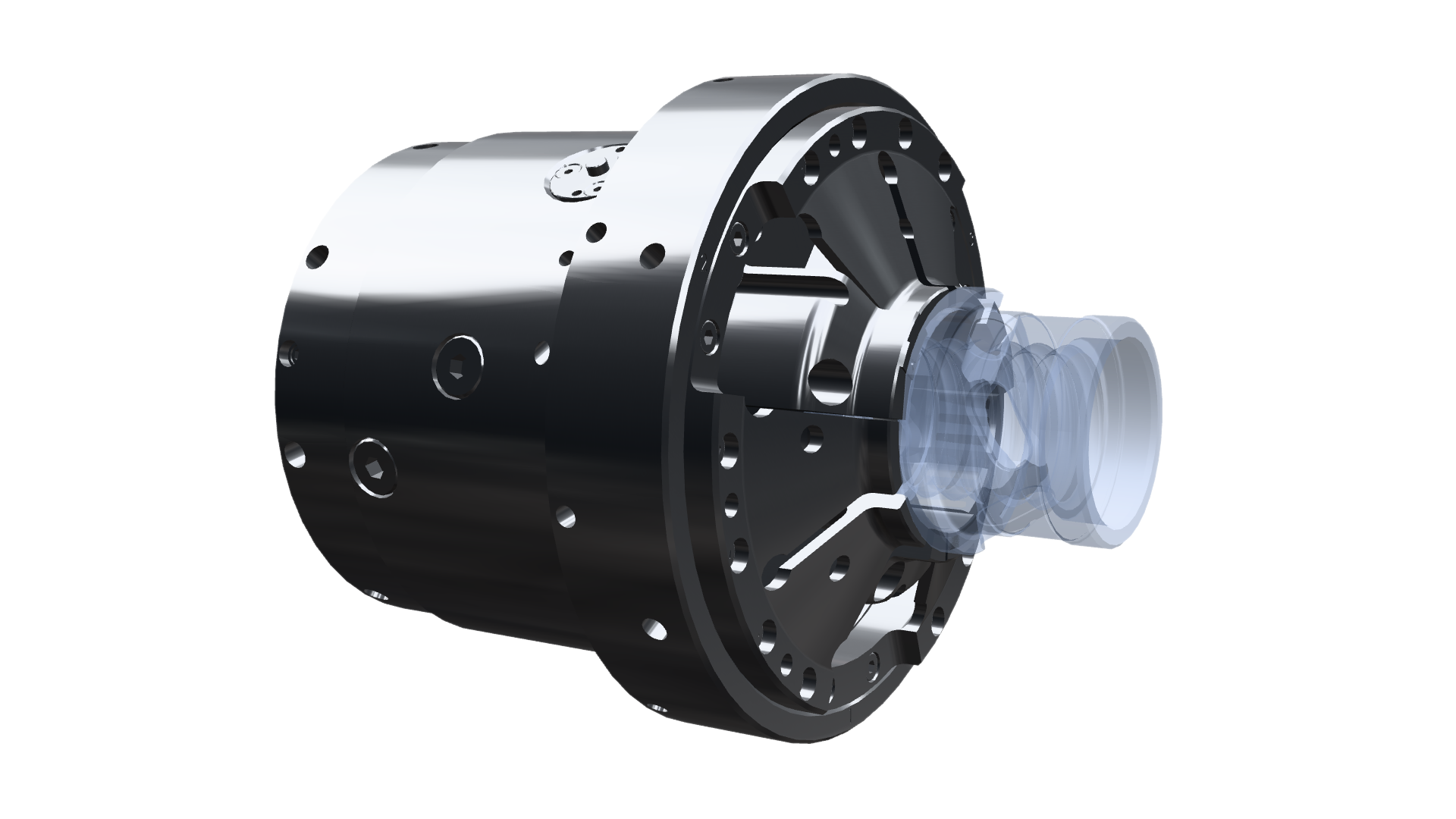
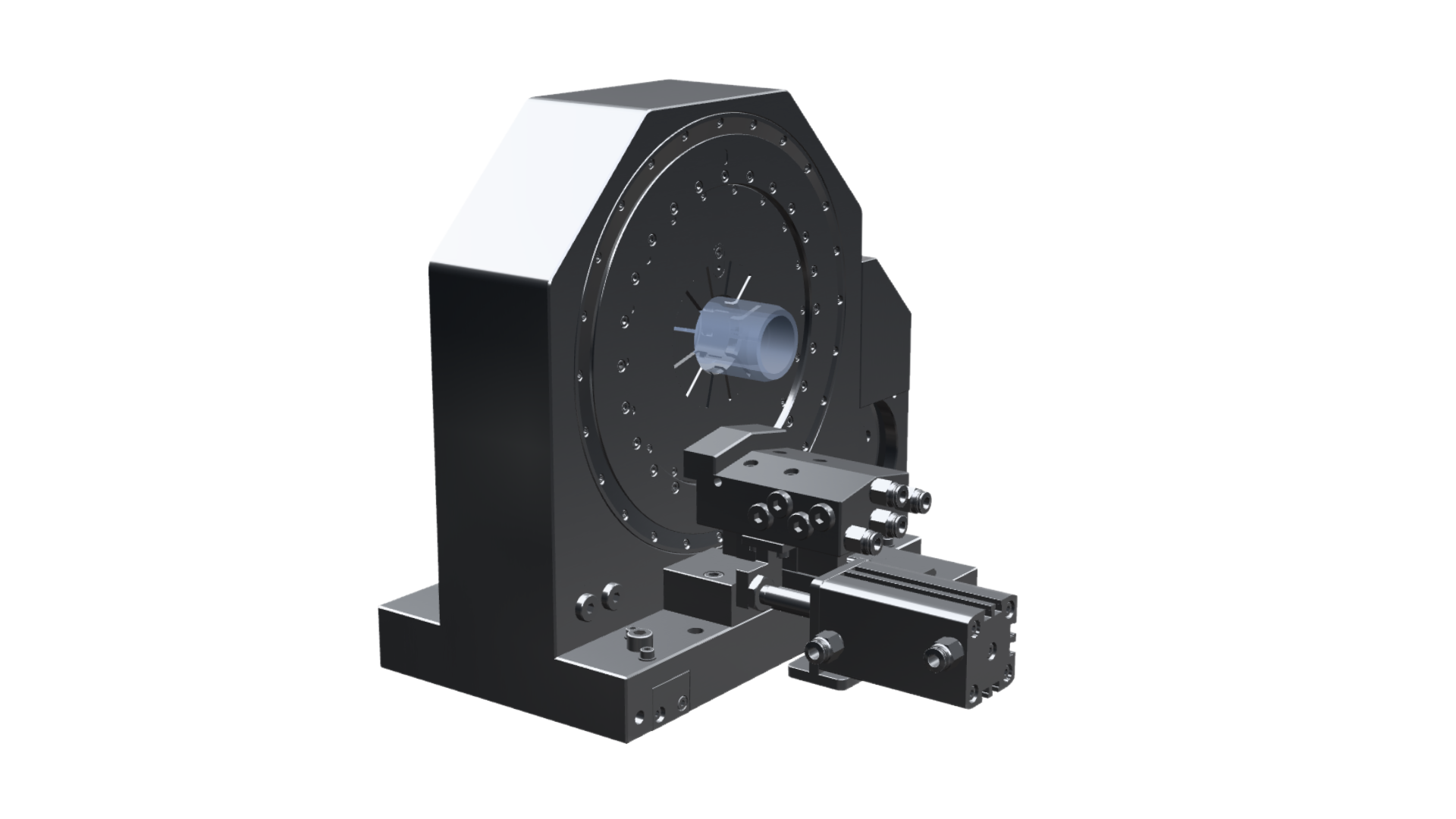


CUSTOMIZED: LIKE THE WORKPIECE ITSELF.
We develop and manufacture our clamping and machining solutions in the same way that high-precision individual parts meet the highest demands in innovative applications: with micrometer precision, smart and precisely tailored to your needs.
Development partner from concept to commissioning.
Whether it’s a new machine, a retrofit, or the modification of existing machine tools, STERMAN supports projects from the initial idea and design through engineering, manufacturing, and assembly to commissioning—and, upon request, well beyond that. With a vertical integration rate of over 85 percent, our solutions are primarily manufactured at our facility in St. Georgen in the Black Forest. For an initial clamping concept, a workpiece drawing and the essential information about the machining process are usually sufficient.


MADE IN THE BLACK FOREST. STERMAN ENGINEERING FOR INDUSTRY.
Custom clamping systems, fixtures, and machines for demanding industrial applications around the world.
Specific applications demonstrate the breadth of this expertise: For TRUMPF, STERMAN manufactures clamping towers for the high-precision positioning and joining of individual parts prior to the subsequent laser welding process—for example, for the axle housings of modern trucks with accuracy requirements of less than 0.05 mm. For ADDI-DATA, STERMAN developed a measuring and calibration device for Siemens electric motor shafts with accuracies in the micrometer range. At HAAS, custom STERMAN clamping fixtures are used for high-precision tool grinding processes in the micrometer range. For YASA, a STERMAN clamping and joining station enables the high-precision assembly of carbon rings for axial-flow motors with tolerances in the range of 0.01 mm. For ALFING, STERMAN developed a hinged center drive for machining large camshafts with tolerances in the micrometer range.

























STERMAN Expertise:
FAQ – Industrial Applications
When is a custom-designed clamping solution worthwhile?
Whenever a manufacturing task demands more than a standard clamping device can provide. Complex geometries, unusual machine designs, special process forces, or the combination of multiple manufacturing steps may require a customized solution. STERMAN develops such clamping systems based on the workpiece, the associated machine, and the process—ranging from individual clamping devices to complete, automated special-purpose machines, the core of which always remains an optimal clamping process.
Which clamping method is right for an industrial application?
This can only be determined based on the specific machining task. Workpiece geometry, material, reference surfaces, machining forces, accessibility, and accuracy requirements determine whether, for example, a sleeve mandrel, collet chuck, diaphragm, sliding jaw, centering, face, or pull-down clamping is the appropriate solution. Often, the optimal solution lies in a combination of several clamping principles—integrated, if necessary, into a custom-designed STERMAN special-purpose machine for particularly demanding manufacturing or handling processes.
What requirements can a custom clamping solution meet?
In addition to dimensional accuracy, concentricity, and repeatability, low-deformation clamping, high force and torque transmission, or maximum accessibility to the workpiece can be critical factors. If the process is not a traditional machining operation—but rather, for example, a testing, measuring, joining, or assembly operation—positioning accuracy, reproducible handling, and a defined workpiece orientation become even more important. At STERMAN, therefore, we consider not only the clamping device itself, but also the interaction between the workpiece, clamping technology, machine, and manufacturing or handling process.
For which manufacturing processes does STERMAN develop clamping solutions?
STERMAN’s custom clamping technology is used far beyond traditional machining processes. Solutions are developed for turning, milling, and grinding, as well as for welding, joining, assembly, measurement, and calibration processes, among others. Multiple process steps can also be combined in a single fixture or custom machine. The specific manufacturing or handling task is always the decisive factor.
Can STERMAN clamping systems and fixtures be integrated into existing machines?
Yes. Clamping systems, spindle assemblies, fixtures, and other components can be specifically designed for existing machine tools and manufacturing systems or retrofitted. This allows existing machines to be upgraded—for example, in terms of accuracy, process monitoring, or automation—without necessarily having to replace the entire production line.
How does a project for a custom clamping solution begin at STERMAN?
For an initial clamping concept, a workpiece drawing and the essential information regarding the machining or manufacturing process are generally sufficient. Based on this, STERMAN analyzes, among other things, the workpiece geometry, coordinate system, machining forces, required accuracies, machine concept, and automation requirements. Based on this analysis, a customized clamping concept is developed—ranging from individual clamping systems to spindle assemblies and fixtures, all the way to a complete custom machine.